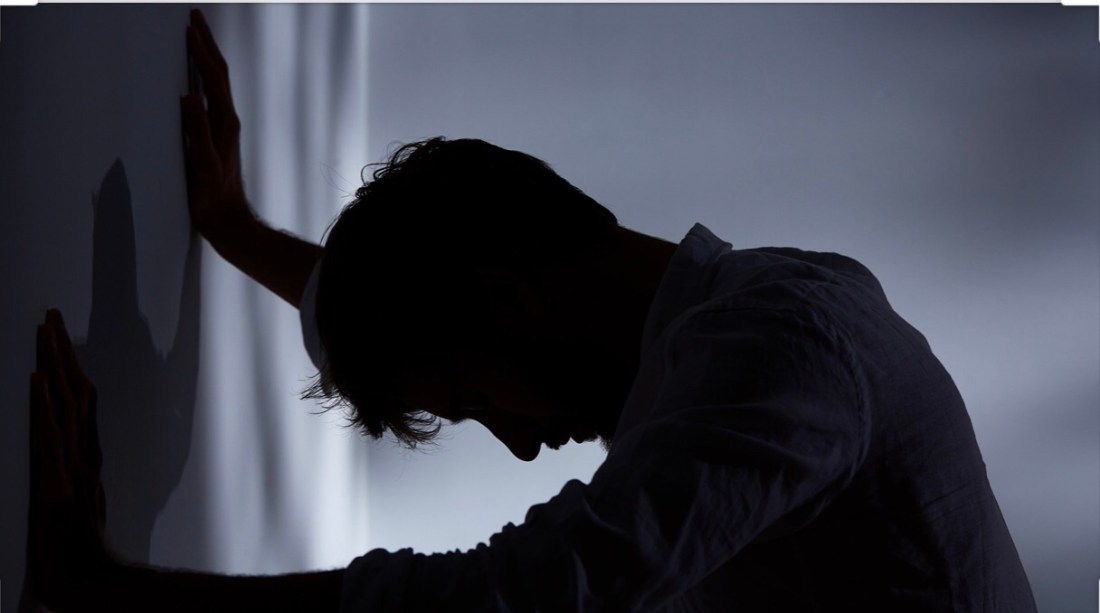
Substance Abuse Disorder (Cocaine)

When Jane first entered medical school the stress was new to her. The short nights, long hours of work and the need to excel constantly wore her out. She was introduced to marijuana by her roommate which seemed to do the job just fine as a stress reliever. But after a while, its benefits became short term; it relieved her depression for a short while until its effects wore off and her depression came back even worse. During her final year she met a guy she wanted to marry. He proposed to her earlier than expected. The stress of planning a wedding coupled with being in school became unbearable; the marijuana no longer sufficed. One night she went for a party where she tried cocaine for the first time. The cocaine gave her an immediate gratification to counter her depression. For the first time in a long time she felt alive and happy; like she was in control of her life. And even though her depression came back worse after the cocaine’s effects wore off, to her it was better than nothing. She started taking cocaine everyday from then. The little money she had could not fund her new found “expensive hobby”. She used her school fees, allowance and money meant to plan her wedding to satisfy her urges. She became a wreck; she couldn’t continue medical school. She called of her wedding and became continuously nervous and irritable. She became a liability to herself and her family.

Cocaine is a type of stimulant that activates the central nervous system, causing feelings of happiness, energy and power. People who are addicted to cocaine often develop a tolerance for the substance; they experience diminished effects from the same dose of the substance and require more and more of it to achieve intoxication. Cocaine addicts undergo some behavioral changes in sociability; they are angered easily, anxious, hyper vigilant and have an impaired judgment. They also go through physiological changes such as rapid heart beat, dilation of the pupils, elevated or lowered blood pressure, weight loss, psychomotor retardation or agitation, muscular weakness and slow breathing. They get a lot of seizures and are mostly confused and lost.

Parents who are drug addicts are likely to produce drug addictive children. This is because most children view their parents behaviors as good and acceptable and therefore are likely to copy them. Also, the “highs” produced by the stimulant encourages peoples to indulge in such behaviors; people like to feel happy and calm. Environmental factors such as poverty, job loss and peer pressure are also factors that can cause one to abuse drugs. Since some areas of the frontal cortex play an important role in controlling our urge to drink, smoke or use drugs, a deficit in such areas can cause one to be drug addictive.

MentalMondays by Akwama

Paraphilic Disorders Involving Non-human Objects

Scenario 1 (Fetishism)

Peter’s sexual excitement started at age 10 when he popped up in his mother’s room and saw her in stockings. In adolescence, he would steal his older sister’s stockings and masturbate to them. Increasingly, he observed that he ejaculates to fantasies of women in stockings anytime he masturbated. In adulthood, he only had sex with women who wore stockings. He was simply unable to maintain an erection or ejaculate anytime he slept with a woman who didn’t have stockings on.

Scenario 2 (Transvestic Fetishism)

Paul grew up cross-dressing as a child. He would put on makeup and wear his mother’s clothes and heels for fun. He would borrow his mother’s heels and masturbate in them because that was the only way he could attain sexual gratification. He never married because he wasn’t interested in having sexual intercourse with anybody. Masturbating in heels was all he needed to get by sexually. He wasn’t a homosexual, neither did he have homosexual tendencies.

Peter and Paul’s conditions are one of several kinds generally called paraphilia, that is to say, a condition in which one’s sexual arousal and gratification depend on fantasizing about and engaging in sexual behaviors generally considered abnormal and extreme. The objects of paraphilia vary enormously: they can be animate things like children, animals or inanimate things like underwear and feces; they can Involve a particular act, such as inflicting pain on oneself or on others, exposing/humiliating oneself or others. Specifically, Paul and Peter’s conditions are classified under paraphilia involving non-human objects. This type of paraphilia can be seen in two forms:

Fetishism which involves a strong sexual attraction to and fantasies involving inanimate objects.

Transvestic Fetishism which involves extreme sexual arousal obtained through cross dressing.

CAUSES: some theorists believe that these fetishes develop as a result of childhood experiences where an object has been associated with sexual arousal or gratification. It is also believed that when people are deprived of normal social sexual contexts, they go for less socially acceptable means. Whatever the theory, it is believed by many experts that Some men develop these fetishes because of the fear of rejection and humiliation from the opposite sex, or in order to compensate themselves for feeling inadequate or doubting their masculinity; alternately, a child who may have seen or experienced an inappropriate sexual encounter may later imitate it and be reinforced by such behavior.

MentalMondays by Akwama.

Conduct Disorder

As a toddler Kofi was a difficult child. He was demanding, impulsive and disobedient. His mother used his attitude as an excuse to maltreat and abandon him. As a kid he was frequently left at home alone without supervision. His mum beat him, burnt him, starved him and spat on him for the slightest wrong doings. She took any opportunity she got to physically abuse her son even when he hadn’t done anything wrong. To escape from this abusive reality, Kofi found solace in hurting other people and animals. He found joy in killing and dissecting animals; this became his newly found hobby. He also started fist fights so that he could deliberately hurt people. He derived pleasure from these acts. At age 17 he was suspended for setting his High school on fire. These behaviors developed as he grew. He grew up to be irritable and agitated all the time. At work he would be mean to his colleagues and always get into fights with them. He went out of his way to be disobedient to authorities and took pleasure in breaking the rules. He could never develop any stable relationships (friendships included) and abused anyone he got involved with. He grew up all alone with no one around him because he had made a name for himself as an aggressive person.

SYMPTOMS: people with conduct disorder are aggressive towards people and animals. They are usually thieves and take pleasure in violation of rules and destruction of properties.

CAUSES: this disorder can be seen more likely in children whose parents have a history of antisocial personality disorder. Other causes could be a genetic predisposition, exposure to abusive parents and child neglect. Children in the lower socioeconomic class are likely to develop this disorder. People with this disorder mostly have assumptions that others would be aggressive towards them and this leads them to be aggressive towards others.

MentalMondays by Akwama

Dependent Personality Disorder

Her friends were ‘busying’ her calls; she panicked. She had started to notice the gap in their relationship. Anne sat and wondered if they were fed up with her needy nature. In school, one of the boys who tried to have a relationship with her had told her she was too needy and suffocated people with her ‘love’. Anne was constantly uncertain of what move to make. Even after pestering her friends to help her make a choice, she would spend the following hours contemplating and asking her friends if it really was a right choice. She chose courses because her friends had chosen them. She would hold the same opinions as her friends only to fit in. Whenever she is faced with a difficult situation, she never tries to tackle it on her own. She would always look for someone(friends/boyfriend) to dump it on and tell her what to do. Her current relationship was shaky because her boyfriend was constantly irritated with her. She would always overreact if he was unable to pick her calls or reply her immediately. She was jealous that he had a good friendship with his female classmates. She would call him in the middle of the night to ask him if he really loved her and go on to described how distraught she would be if he ever left her.

SYMPTOMS: people with dependent personality disorder have difficulties in making simple decisions, have a constant need for attention and reassurance, and would never take any initiative unless it will make them ‘belong’. These people are highly prone to being abused in relationships(friendship) because of their fear of loss of that ’emotional support’ and the idea that for once, they would have to do anything independently. They are over accommodating and usually make excuses when the people they depend on hurt them. when they lose the people they depend on, they immediately try to find someone to fill the void.

CAUSES: caused by a combination of biological and development factors. People exposed to authoritarian or overprotective parenting style, chronic physical illness, or separation anxiety during childhood may be more likely to develop dependent personality traits.

MentalMondays by Akwama.

Anorexia Nervosa

There was a craze for skinny girls in her high school. “Unluckily” for Claire, she was not built like these other girls. She wasn’t fat, but she wasn’t skinny enough to meet the school’s criteria for what a slim girl should look like. She was stocky built. She never got the attention the other girls got and she was subjected to listening to her male friends fantasize about these other girls. This is where her anxiety started. There was a party one weekend that she went to. At this party everyone was supposed to pick a dance partner. The girls were less than the boys in attendance and even though all possible pairs had been made, the other boys rather waited their turn to dance with the skinny girls and totally ignored her. That night, after the party, she stayed in front of the mirror for several hours analyzing her body and finding faults with every thing possible and making comparisons to the other girls till she finally convinced herself she was ugly and fat and needed to do something about it. She started skipping breakfast and lunch. Despite her significantly reduced weight, however, she wasn’t satisfied; so she started skipping dinner also. She resorted to 2 apples a day and a handful of cereal and even with that she would still stick her finger down her throat to vomit right after eating because she believed it would make her fat. She still wasn’t satisfied with her weight so she started a vigorous regime of exercise. She would go to the gym for close to 10 hours a day. Her immune system began to break down; she became bony and skeletal; she lost concentration; she would get her period about twice a year or not at all; She would faint regularly and be hospitalized very often. In short, she was unhealthy. Still, she believed she had to lose more weight.

Anorexia Nervosa is an eating disorder caused by the obsessive fear of becoming overweight or a distorted perception about weight, and anxieties about how to control and be in shape.

SYMPTOMS:It typically leads those who have this fear or perception to stay of food for longer periods of time, eat little or no food, sometimes even use substitutes for food, and exercise beyond acceptable limits; yet they remain convinced that they are fat and need to lose more weight. Anorexia is less about food and more about what some people do to cope with an emotional problem or the problem of being socially acceptable: when people place so much value on weight and shape, and think if they are of a certain degree of thinness or weight, then they have self-worth and deserve to be admired or recognized as such.

CAUSES: Most researches on this topic using twin studies have found that hereditary and genetics play a role in this disorder. Deficits in our hypothalamus, an imbalance of certain neurotransmitters and societal pressure to be thin and attractive are also some causes of Anorexia Nervosa.

MentalMondays by Akwama

Narcissistic Personality Disorder

FUNFACT: the word narcissist comes from a Greek myth of Narcissus, who fell in love with the reflection of himself in a pool, was unable to leave it, and died as a result.

Persons with this disorder think they are better than everyone and should get their way in all circumstances, even if they have to walk over others to accomplish their goals.

SYMPTOMS: they seek admiration from others, rely on their inflated self-evaluation, and see dependency on others as weak and threatening. Grandiosity is a distinguishing feature associated with narcissists, as they are pre-occupied with thoughts of self-importance and fantasies of power and success and view themselves as superior to other people. They are shallow in their emotional expressions and relationship with others, and in interpersonal relationships, they make entitled demands on others to follow their wishes. They ignore or devalue the needs and wants of others, exploit others to gain power, and are arrogant and condescending.

CAUSES: according to the psychodynamic theory, people with this disorder do not develop a realistically positive view of themselves or adaptive strategies for handling stress and distress as children, so they rely on the praises of others for their self-esteem. Cognitive theorists believe that, people develop unrealistically positive assumptions about their self-worth as a result of indulgence and over evaluation by significant others during childhood, others also develop the believe that they are unique or exceptional as a defense against rejection or unmet needs by important people in their lives.

Consider the following;

Joe was a surgeon in his early 40’s who sought treatment for Mania. He would tell his therapist how he was an “ace” student with no concrete evidence. He fantasized about being the best surgeon in Ghana, marrying the most beautiful and most intelligent woman and having smart and beautiful kids who went to the best schools. Anything below that wasn’t even an option. He married his first wife when they were in the university because she won a beauty pageant ( which made her the most beautiful and popular girl in school); he did this because this was in line with his illusion of a perfect life. His wife worked 2 jobs to support him through medical school, but right after he was done, he divorced her on the excuse that, although she was beautiful, she wasn’t good enough for him, or accomplished enough to be his wife. He never remarried but had a string of casual sex. According to him, nobody deserved him and nobody was good enough for him to date. He believed that he had to spend all his money on himself, and that he had to wear the most expensive clothes and buy the most expensive things. He lived for the praises that came with it. He would let his family members beg before he helped them because the begging fed his ego and made him feel superior and very important. He felt because he was different his colleagues didn’t have any right to criticize him but he on the other hand had every right to criticize them. He had no empathy whatsoever and saw no problem in taking advantage of other people if they were “stupid” enough to let him.

MentalMondays by Akwama

DEPRESSION

Akua had big dreams and aspirations. According to her, nothing was impossible to achieve once you put your mind to it and work hard. Her plan was to finish Senior High School with straight A’s, go to medical school, become a doctor, help people, and start a family by the age of 28. But as we all know, life doesn’t always go according to plan. She neither got straight A’s nor admission to medical school even though she studied and worked very hard. Her dream school offered her psychology. She was sad and down but she said to herself, “this is not so bad, all I have to do is to get good grades and apply for post-graduate medicine. I can even go ahead to do psychiatry and i’ll have an upper hand because of my background in psychology” but life struck again, and she failed miserably. Her grades were not good enough and she finished the university with a very poor FGPA. She still had hope that she would be admitted as a post graduate to medical school so she kept applying. She failed to consider other options because this was her dream and not fulfilling it would mean she had failed in life. All schools in Ghana rejected her application because she did not have a good enough GPA, but she told herself, “I’m good enough to be a doctor, Ghana doesn’t deserve me”. She spent the next 5 years of her life applying for scholarships to schools in Canada, Ukraine, China, U.K and U.S.A. Again all the schools she applied for rejected her. She was 28, had no job, she hadn’t started a family as planned, she didn’t even have a boyfriend to begin with and she wasn’t a doctor either. That’s when it hit her and her world came tumbling down.

She would read the same page over and over only to realize she had no memory at all of what she had just read. Her mind had turned on her; it mocked her for her foolish plans. She couldn’t concentrate, she no longer found anything interesting, enjoyable or worthwhile. She thought to herself, “I am going to die someday, what difference does anything make”. She was totally exhausted and could hardly pull herself out of bed in the mornings.  It took her twice as long to walk anywhere. She wore the same clothes over and over again because  making a decision on what to wear  was too much of an effort for her, she dreaded talking to people and avoided her friends as much as possible, virtually inert with a dead heart and a brain as cold as clay.

DEPRESSION: is a feeling of severe despondency and dejection.                                     SYMPTOMS: people with depression lose interest in everything and feel no emotions when they try to do something enjoyable. Depression may be characterized by changes in one’s appetite, sleep pattern and activity levels. People with depression have what we call psychomotor retardation, that is, they walk more slowly and quietly. They also have more accidents because they cannot react more quickly to avoid them, they lack energy, they experience chronic fatigue and they also have psychomotor agitation which is when one fidgets and moves around aimlessly. Their thoughts are filled with guilt, worthlessness, hopelessness and suicide. In severe cases, they lose touch with reality and experience delusions and hallucinations.                                

CAUSES: it can be caused by a genetic predisposition, an increase or decrease in some neurotransmitters, a functional and structural abnormality of the brain, endocrine factors, irrational thought patterns, childhood trauma, it can also be learned environmental factors such as the death of a loved one or joblessness can also cause depression and gender and ethnic differences can also influence depression.                      

MentalMondays by Akwama.